

Less-than-truckload shipping. Definition & largest LTL carriers in the US
Less-than-truckload shipping can be a practical option for businesses with smaller shipments and irregular shipping volumes. In this knowledge article, we explain what less-than-truckload shipping is, compare it with full truckload shipping, and list the top 20 LTL carriers in the US.
What is less-than-truckload shipping?
Less-than-truckload shipping, often abbreviated as LTL, is a freight transport method where your shipment shares trailer space with freight from other shippers. Instead of booking a full trailer as with full truckload shipping, you pay only for the space your goods occupy, typically based on weight, dimensions, freight class, and the lane. LTL carriers collect freight from multiple pickup locations, consolidate it at terminals, and then move it through a hub-and-spoke network toward the destination. This makes LTL a common choice for palletised freight and smaller loads that do not require a dedicated trailer, while transit times and handling can vary depending on the number of transfers along the route.
LTL vs FTL
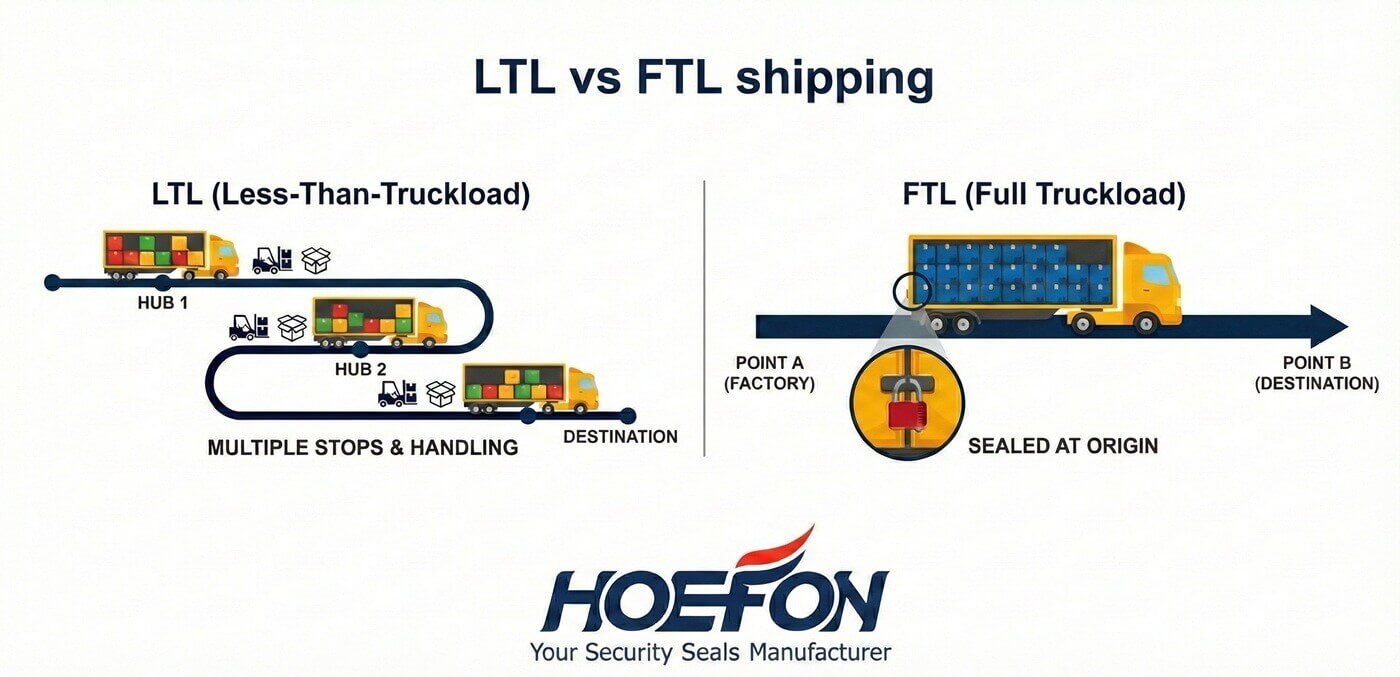
Less-than-truckload (LTL) and full truckload (FTL) shipping each come with their own advantages and disadvantages. We have summarised the key differences in the following table.
| Aspect | LTL (Less-than-truckload) | FTL (Full truckload) |
|---|---|---|
| Definition | Your freight shares trailer space with shipments from other shippers. | One shipment occupies the entire trailer with no consolidation. |
| Shipment size | Best for smaller loads, usually around 1 to 6 pallets. | Best for larger loads, typically 10 to 26 pallets or a full trailer. |
| Price structure | Rates are calculated based on weight, dimensions, freight class, lane, and accessorials. | A flat rate per truck is common and becomes cost-effective at higher volumes. |
| Transit time | Typically longer due to terminal transfers and multiple stops. | Typically faster because the load moves directly from origin to destination. |
| Handling | More touchpoints at terminals, which can increase damage risk. | Limited handling, reducing the likelihood of freight damage. |
| Use case | A good fit for smaller shipments where delivery speed is less critical. | A strong choice for time-sensitive freight, high-value cargo, or when you need full capacity. |
| Pickup planning | Often more flexible because the shipment footprint is smaller. | Requires tighter planning, especially around loading windows and trailer utilisation. |
| Cost efficiency | Cost-efficient when you do not need a dedicated trailer. | Most efficient when the trailer is well utilised or when transit speed justifies the cost. |
| Typical industries | E-commerce, distributors, and shippers with irregular volumes. | Manufacturing, automotive, and high-volume retail supply chains. |
Less-than-truckload carriers in the US
Are you looking for LTL trucking companies? We have listed the top LTL carriers in the US.
FedEx Freight
⭐ Profile: National Premium / Speed-Focused
🗺️ Network: Largest LTL carrier in the U.S. with massive density. Two distinct networks: Priority (fast) and Economy (cost-effective).
🚛 Specialization: Excellent for residential deliveries and liftgate requirements due to their parcel-integrated infrastructure.
💻 Technology: Top-tier visibility. Integrates seamlessly with FedEx parcel shipping tools.
🔄 Flexibility: Strict rules on packaging, but highly reliable for time-sensitive freight.
Old Dominion Freight Line (ODFL)
⭐ Profile: National Premium / “Best in Class”
🗺️ Network: 100% direct coverage (rarely outsources/interlines), ensuring total control over freight from coast to coast.
🚛 Specialization: Industry leader in low claims ratios (<0.2%). The best choice for fragile, high-value, or retail-compliance freight.
💻 Technology: Real-time visibility is highly accurate; their dashboard is a standard-setter for logistics managers.
🔄 Flexibility: Premium pricing (high cost), but offers “Must Arrive By” guarantees and high security.
Estes Express Lines
⭐ Profile: National Standard / Heavy Haul
🗺️ Network: Largest privately held LTL carrier in the U.S. with extensive terminal density and cross-border solutions.
🚛 Specialization: Very strong in “Volume LTL” and handling non-standard, ugly, or heavy freight that others reject.
💻 Technology: Robust shipper portal with good API capabilities for quoting and image retrieval.
🔄 Flexibility: More flexible than public companies; known for creating custom solutions for large projects.
XPO
⭐ Profile: National Standard / Tech-Driven
🗺️ Network: Massive national footprint with strong cross-border service into Mexico and Canada.
🚛 Specialization: High capacity for palletized freight. Extensive in-house trailer manufacturing supports capacity needs.
💻 Technology: Industry leader in proprietary technology, offering dynamic pricing and automated workflow tools.
🔄 Flexibility: Broad accessorial menu, though they perform best on consistent B2B dock-to-dock lanes.
R+L Carriers
⭐ Profile: National / Versatile
🗺️ Network: Nationwide coverage with a good balance between major metros and rural delivery points.
🚛 Specialization: “Business Critical” services are a strength. Notably good at liftgate and residential delivery compared to heavy-freight carriers.
💻 Technology: Solid shipping platform with easy access to BOLs and PODs.
🔄 Flexibility: Known for being user-friendly and reliable for mid-sized shippers.
Saia LTL Freight
⭐ Profile: National Premium / Rapid Expansion
🗺️ Network: Historically multi-regional, now fully national. Aggressively opening new terminals in the Northeast and Midwest.
🚛 Specialization: Focuses on speed and precision. Strong “Custom Solutions” department for retail distribution.
💻 Technology: Heavy investment in data analytics to improve transit times and prediction accuracy.
🔄 Flexibility: Good mix of standard and guaranteed service options.
ABF Freight (ArcBest)
⭐ Profile: National Premium / Unionized
🗺️ Network: Long-standing national network. Drivers are unionized (Teamsters), often correlating with higher experience levels.
🚛 Specialization: Exceptional for trade shows, white-glove delivery, and complex handling requirements.
💻 Technology: The ArcBest platform connects LTL with expedite and truckload brokerage for a full supply chain view.
🔄 Flexibility: Their “U-Pack” consumer moving service utilizes the same network, offering unique capacity options.
TForce Freight
⭐ Profile: National / Cross-Border
🗺️ Network: Formerly UPS Freight. Deep coverage across the U.S. with strong connectivity to Canada and Mexico.
🚛 Specialization: Reliable standard LTL. Like FedEx, they are well-equipped for deliveries requiring liftgates and inside delivery.
💻 Technology: Web tools are mature and geared towards ease of booking and document retrieval.
🔄 Flexibility: Good capacity for trade show shipping and government freight.
Southeastern Freight Lines (SEFL)
⭐ Profile: Regional Premium (Southeast)
🗺️ Network: Dominant in the Sunbelt (Texas to Virginia). Uses partners (like Dayton and Oak Harbor) for national reach.
🚛 Specialization: “Quality Without Question” motto. Extremely high customer service levels and on-time performance within their region.
💻 Technology: Excellent visibility tools that mirror national carrier capabilities.
🔄 Flexibility: The go-to carrier for distribution within the Southeastern U.S.
Central Transport
⭐ Profile: National Economy / Budget
🗺️ Network: Broad U.S. coverage focusing on major manufacturing hubs and distribution centers.
🚛 Specialization: Price leader. Best suited for durable, palletized goods where low cost is priority over speed or handling.
💻 Technology: Functional tracking tools suited for basic status updates.
🔄 Flexibility: Aggressive pricing structure, but strict on pickup/delivery windows.
Averitt Express
⭐ Profile: Regional Plus (South)
🗺️ Network: Stronghold in the South, but operates as a “super-regional” carrier. Distinctive professional image (red trucks, uniforms).
🚛 Specialization: The “Power of One” concept: they integrate LTL, Dedicated, and Truckload seamlessly.
💻 Technology: High-quality portals. Very strong in data integration for retail replenishment.
🔄 Flexibility: Excellent for shippers who need both LTL and full truckload support from one vendor.
Knight-Swift LTL
⭐ Profile: Multi-Regional Aggregator
🗺️ Network: A parent company comprising strong regional brands like AAA Cooper (Southeast) and Midwest Motor Express.
🚛 Specialization: Offers coast-to-coast coverage by connecting these regional networks underneath one umbrella.
💻 Technology: Tech varies by operating company, but integration is improving rapidly.
🔄 Flexibility: Allows shippers to access deep regional expertise through a single large enterprise relationship.
Dayton Freight Lines
⭐ Profile: Regional Premium (Midwest)
🗺️ Network: The absolute leader in the Midwest. Strategic partnerships allow them to service the rest of North America.
🚛 Specialization: Known for tactical precision and extremely low damage rates in the Midwest manufacturing belt.
💻 Technology: Sophisticated tech that rivals the largest national carriers.
🔄 Flexibility: Ideal for “Just-in-Time” manufacturing supply chains in the region.
Forward Air
⭐ Profile: Expedited / Airport-to-Airport
🗺️ Network: Not a traditional LTL network. Operates a high-speed network between major airports and logistics hubs.
🚛 Specialization: Urgent, high-value, or security-sensitive freight. Often used as a cheaper alternative to domestic air cargo.
💻 Technology: Precision tracking designed for time-critical movements.
🔄 Flexibility: Strict cutoff times, but faster transit than standard LTL. Generally does not do residential/curbside.
PITT OHIO
⭐ Profile: Regional Premium (Mid-Atlantic)
🗺️ Network: Dense coverage in the Mid-Atlantic and Midwest regions.
🚛 Specialization: Sustainability leader (green fleets). Famous for “Heat Track” services (protecting freezable goods in winter).
💻 Technology: Innovative customer tools; consistently voted a top carrier by shippers for reliability.
🔄 Flexibility: Highly reliable for short-haul replenishment and next-day delivery lanes.
A. Duie Pyle
⭐ Profile: Regional Premium (Northeast)
🗺️ Network: Dense coverage across the congested Northeastern U.S. corridor.
🚛 Specialization: Integrated logistics. They own extensive warehousing, allowing for “Pool Distribution” strategies in the Northeast.
💻 Technology: Strong dashboard for managing both transport and inventory visibility.
🔄 Flexibility: Excellent for navigating the difficult driving conditions of NYC and New England.
Roadrunner
⭐ Profile: Long-Haul Specialist / Metro-to-Metro
🗺️ Network: Unique “Point-to-Point” model. They focus only on major metros and do not stop at intermediate hubs.
🚛 Specialization: Reduced handling means less damage on long-haul lanes. Competitive pricing for cross-country moves.
💻 Technology: “Haul Now” app and upgraded tracking tools following their massive operational restructure.
🔄 Flexibility: Great for direct long-haul, but less effective for rural deliveries or short regional hops.
Daylight Transport
⭐ Profile: Expedited Long-Haul
🗺️ Network: Focuses on long-haul lanes (e.g., LA to NY) using sleeper teams (two drivers) to drive non-stop.
🚛 Specialization: Speed. They offer air-freight speeds at LTL ground rates.
💻 Technology: Simple, effective tracking focused on transit time milestones.
🔄 Flexibility: The best option when you need cross-country speed without paying for air cargo.
Oak Harbor Freight Lines
⭐ Profile: Regional Premium (West)
🗺️ Network: Deep coverage in Washington, Oregon, Idaho, California, and Nevada.
🚛 Specialization: The premier partner for the Pacific Northwest. Often the delivery arm for Eastern carriers like SEFL.
💻 Technology: Reliable tracking and customer service tools.
🔄 Flexibility: Strong expertise in the specific geographic challenges of the West Coast.
Ward Transport & Logistics
⭐ Profile: Regional (Mid-Atlantic)
🗺️ Network: Focuses on the Mid-Atlantic region with a “hybrid” approach to partnerships for extended reach.
🚛 Specialization: Very customer-centric with a claim-free delivery focus.
💻 Technology: Standard tools, but high-touch customer service often replaces the need for self-service.
🔄 Flexibility: Good for localized distribution requiring specific appointment times.
Hoefon’s solutions for Less-than-truckload freight
Hoefon Security Seals provides specialized solutions to mitigate the specific risks associated with Less-than-truckload (LTL) shipping. Unlike FTL, LTL cargo is handled at multiple terminals and shares trailer space with other shipments. Because the trailer itself cannot be sealed by the shipper in this shared network, we recommend securing the individual handling units. Our portfolio includes tamper-evident security tape and labels that provide an instant visual indication if a pallet or carton has been opened or manipulated during transit.
For goods transported in roll cages, totes, or secure boxes, we offer distinctively numbered plastic pull-tight seals to ensure a clear chain of custody between origin and destination. To monitor handling quality during the frequent cross-docking transfers typical of LTL, we also supply impact indicators and shock loggers. If you require more information about securing your LTL freight or need advice on the right product, feel free to contact us.

Niels Pas
CEO Hoefon Security Seals
Niels Pas has been Hoefon Security Seals’ CEO since 2017. He has extensive international experience and speaks 4 languages professionally.